Industrial Boiler Breakdown: What to Do in the First Hour and How to Prevent the Next One
An industrial boiler breakdown can interrupt production, affect process temperatures and put delivery schedules under pressure. The priority is to make the situation safe, record what happened and establish how production can be managed while the fault is assessed.
When a boiler breaks down, operators should:
- Make the area safe by following the site emergency and shutdown procedures
- Keep personnel clear of suspected leaks, damaged equipment and other hazardous areas
- Record alarm codes, operating readings and the time of the breakdown, where safe to do so
- Follow the site’s contingency plan for standby equipment or reduced steam demand
- Contact a qualified boiler technician for diagnosis and repair advice
Do not repeatedly reset a boiler lockout, bypass a safety device or attempt a repair without the required training and authorisation. The correct response depends on the equipment, fault and site procedures.
What to do in the first hour
The first hour is about controlling risk and giving the service team enough information to assess the problem. It is not a window for unqualified fault finding.
Make the area safe
If the boiler shows signs of unsafe operation, follow the site’s emergency response procedure. This may require shutting down the unit, establishing an exclusion zone and arranging isolation by authorised personnel.
Isolation and lockout/tagout requirements depend on the installation and the work involved. Fuel systems, steam lines, feedwater and stored pressure can all present hazards. SafeWork SA’s boiler and pressure equipment guidance covers operator training, site procedures and appropriate isolation controls. Do not approach or manipulate equipment where a leak, uncontrolled release or other immediate hazard is suspected.
Record the fault
Capture the information available from the control panel and operating log. Record, where safe and accessible:
- The time of the breakdown and the alarm, fault or lockout code
- Boiler pressure and water-level readings at the time of the fault
- Whether the burner was firing or the boiler was in standby
- Unusual noise, vibration, smell, visible leaks or changes in flame appearance reported by operators
- Recent changes in operating load, feedwater, fuel supply or water treatment
- Recent maintenance, repairs or recurring alarms
Do not open electrical panels, remove guards or carry out tests to collect this information. Use the control interface and records available to authorised operators.
Assess the production impact
Establish which processes depend on the affected boiler, whether another boiler can safely carry the load, and which operations can be reduced, rescheduled or stopped. Consider whether temporary capacity may be required if the outage is likely to continue.
Any change to the operating configuration must follow the site’s engineering and safety requirements. Do not increase a standby boiler’s load beyond its approved operating capacity.
Contact a qualified service provider
Share the recorded fault information, boiler make and model, rated capacity, fuel type, control system, service history and operational impact. A clear handover helps the service team prepare for the assessment and identify whether specialist parts, technical support or temporary equipment may be required.
Five common causes of boiler breakdowns
A breakdown can result from a component failure or operating conditions that develop over time. These five fault areas are common starting points for technical assessment, not a diagnostic checklist for operators.
Low water level and water-level control faults
A low-water condition can trigger a safety shutdown. Possible causes include the feedwater supply, pump, level controls, probes or associated control components. Never treat a low-water lockout as a nuisance alarm or bypass the protection to restart the boiler.
Flame failure and burner faults
Fuel supply interruptions, ignition problems, flame detection faults or burner components can prevent a boiler from firing or cause it to shut down during operation. A boiler not producing steam may have a burner-related fault rather than a pressure-vessel problem.
Scale and water-side fouling
Poor water quality and inadequate treatment can allow scale and deposits to form inside a boiler. These deposits reduce heat transfer and can create localised overheating. WorkSafe Victoria identifies scale formation as a potential boiler safety risk in its inspection and maintenance guidance.
Feedwater supply and treatment faults
Faults involving pumps, valves, pipework, water supply or treatment equipment can affect the boiler’s operating water level and performance. Changes in feedwater conditions may contribute to unstable operation, low-water alarms, scale formation or corrosion.
Controls, sensors and electrical faults
A failed sensor, damaged connection, control fault or electrical issue can prevent the boiler from starting or cause an unexpected shutdown. Alarm codes help identify the affected system, but a technician may need to assess the controls, wiring, sensors and safety functions to establish the cause.
What to expect from a boiler breakdown response
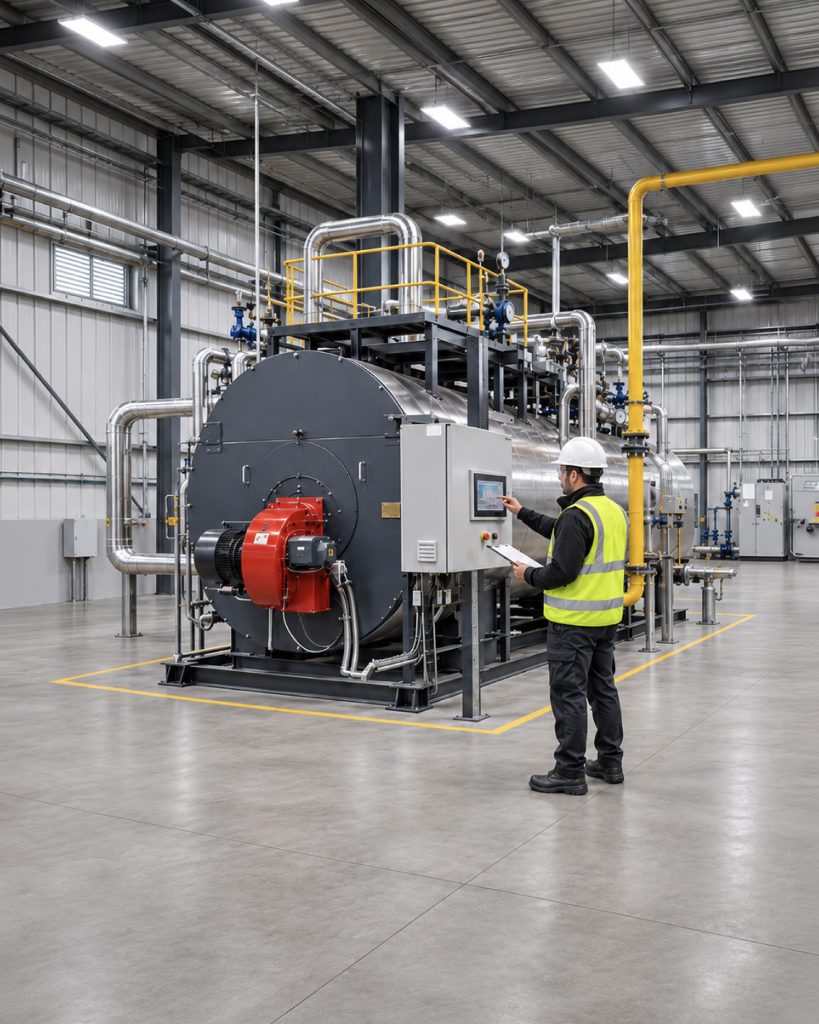
A breakdown response should establish the fault, assess the equipment and identify what is required to return the system to safe service. Depending on the fault, this may include:
- Initial assessment of symptoms, alarms, operating history and site conditions
- Technical diagnosis and the inspection or testing required
- Repair planning, including parts, resources and specialist support
- Return-to-service checks and service documentation
O’Brien provides a 24/7, 365-day nationwide boiler breakdown response, supported by boiler parts and in-house custom gasket manufacturing. Response and repair requirements vary by site, equipment and fault. Confirm the scope and applicable conditions when reporting the breakdown.
For support with an industrial boiler fault, explore O’Brien’s 24/7 boiler breakdown service.
Repair, hire or replace a boiler
The decision depends on equipment condition, production requirements and the cost and duration of the work.
When repair is the right option
Repair may be appropriate when the fault is identified, the equipment remains in suitable condition and the work can restore reliable operation. Assess the cause and extent of the failure, condition of major components, parts availability, repair history, expected service life and checks required before return to service.
A repair should address the underlying cause where possible. O’Brien’s boiler spare parts support can help when replacement components or custom gaskets are required.
When temporary boiler hire may be required
Temporary boiler hire can provide process heat while a permanent boiler is being repaired, cleaned, upgraded or replaced. Consider it when a repair will take time, production depends on the required steam or hot water, or the existing boiler must be removed from service.
The hire system must suit the site’s capacity, pressure, fuel, connections, operating conditions and available space. Installation, commissioning and site integration also need to be assessed.
At Real Pet Food’s Yatala facility, O’Brien supplied a 1.25 MW temporary boiler to maintain production while the 6 MW boiler was cleaned. The wider project delivered a 28.5% reduction in gas use and estimated monthly savings of $45,000. Read the Real Pet Food case study.
For more information on using temporary capacity during an outage, read O’Brien’s guide to temporary boiler hire.
When replacement should be considered
Replacement may be appropriate when recurring failures, deteriorating condition, limited parts availability or repair requirements make the existing boiler unsuitable. Consider equipment age and condition, repair history, parts availability, future production requirements, energy performance and installation costs.
A replacement assessment can compare continued repair costs with the requirements of a new system. See O’Brien’s boiler replacement cost guide for the broader commercial considerations.
How to prevent another boiler breakdown
Not every breakdown can be prevented. A structured maintenance programme can help identify developing faults before they affect production. The programme should reflect the boiler, operating conditions, manufacturer recommendations and applicable requirements, with clear responsibility for each task.
Maintain routine operating checks
Operators should complete the checks required by the site procedure and record pressure, water level, alarms, trips, visible leaks, burner behaviour and feedwater or water-treatment observations.
Investigate recurring alarms and changes
Repeated lockouts, unstable pressure, changing water levels, unusual noise and changes in burner behaviour should be investigated rather than repeatedly reset or ignored. Logbook readings, alarm history, water-treatment results and service reports help technicians identify developing problems.
Schedule competent inspection and maintenance
Plan the inspections, testing and servicing required for the boiler and associated systems. Safety devices, controls, combustion equipment and pressure parts require appropriate technical attention. Inspection intervals should follow manufacturer recommendations and the requirements applicable to the site.
Keep service records current
Keep operating logs, inspection reports, service records, test results, repair details and outstanding recommendations together. A complete service history helps identify recurring faults and supports decisions about repair, upgrade or replacement.
Frequently asked questions
Why does an industrial boiler lock out?
A boiler may lock out when a control or safety device detects an operating condition outside its permitted limits. Causes can include low water, flame failure, high pressure, feedwater faults or control-system problems. A qualified technician should establish the cause before restart.
What should I do when a boiler is not producing steam?
Follow the site’s shutdown and escalation procedures, make the area safe and record available alarm information. Do not bypass safety controls or attempt unauthorised repairs. Contact a qualified boiler technician.
How quickly should a breakdown technician arrive?
Attendance depends on site location, access, the fault and technician availability. Confirm arrangements with the service provider when reporting the breakdown. O’Brien provides a 24/7, 365-day nationwide boiler breakdown response; no fixed arrival time should be assumed.
Can a temporary boiler run while the main boiler is being repaired?
It may, provided its capacity, pressure, fuel, connections and installation suit the site’s requirements. An engineering assessment is needed before deployment and commissioning.
When should an industrial boiler be replaced instead of repaired?
Consider replacement when recurring faults, equipment condition, parts availability or continued repair costs make the existing boiler unsuitable. Future capacity, operating costs, installation requirements and expected service life also matter.
Plan your boiler breakdown response with O’Brien
A boiler breakdown requires a controlled response, a clear technical assessment and a practical plan for maintaining production. O’Brien provides industrial boiler service, parts support and a 24/7, 365-day nationwide breakdown response.
Book a service assessment with O’Brien to discuss your boiler system and service requirements. Explore O’Brien’s boiler service and breakdown support.